Tuesday, December 7, 2010
Final Developments in our Final Project
One of the biggest developments that has occurred over the weekend is the decision to leave the "Consume, Create, and Connect" pages open on the Backpack 2.0 Wiki site open. I was slightly reluctant to do this, but in the end, I realized this was the best way for people to collaborate on our website and add their own tools. Anyone with our website URL can go to one of these three pages, and hit the "Edit" button at the top of that page:
This is SCARY for me. It means that anyone (I don't know why they would, which makes my fear a little irrational) could come online and maliciously change the page for their own purposes! I know, it's a bit of a ridiculous fear, but it is genuinely one I have.
Now, if any of you have AMAZING digital tools that are available online, and would like to add them to our website, please visit: backpack2.wikispaces.com. Collaboratively, this could become an extremely useful website to anyone who visits it.
If you have feedback, you can E-mail me at: sparax88@gmail.com
Thursday, December 2, 2010
Nominations for STELLAR Blogs
Ok, so here are my nominations, really quickly:
Historical Content: Danny Patterson http://pucksonice.blogspot.com/
Computing Content: Rhett Ferrin http://imrhettferrin.blogspot.com/
Self-Directed Learning: Jeffrey Chen http://mrbasics.blogspot.com/
Historical Content: Danny Patterson http://pucksonice.blogspot.com/
- Does a great job of using his personal knowledge and tying it into the concepts we are learning about history
- Shows that he understands the historical content we are studying in each of his posts.
Computing Content: Rhett Ferrin http://imrhettferrin.blogspot.com/
- Great posts that tie in the Computing Content to the historical topics that we are studying
- Doing a great job of keeping us up to date with the Missionary final project
- Extremely informative posts that really expand my understanding as I read them
Self-Directed Learning: Jeffrey Chen http://mrbasics.blogspot.com/
- Lots of Digital Literacy Labs
- Uses the Digital Labs to relate them to the topics at hand
- Great posts about how he is learning new and exciting things on the internet
Though, in all honesty, I've enjoyed reading all the class blogs that I have over the course of this semester. We have a lot of wonderful writers in this class, and it really is hard to just pick a few. In all honesty, I would nominate all the blogs that have kept up with every blog post this semester for one of these categories.
Video Posting in Blogger
Just as another quick update concerning our group project, I figured something out that I really wanted to know how to do.
Normally, when I just want to embed a video from YouTube, I grab the embed code, and then insert it into the "Edit HTML" section of the blog editor. However, sometimes the video is too big, and actually goes outside the blog post, which always looks really tacky. I had this problem again when trying to add a post to our group's Backpack 2.0 blog website. I wanted to embed a video in one of my posts (namely my post about Dropbox) and the video was always too wide, and looked really bad on the website.
However, I did some experimentation, and found out how to shrink the movie to fit the blog! In the embed code, there is a place at the beginning that determines the height and width of the video box, AND there is a place at the end of the embed code that determines the width and the height of the box. If you go in and change those heights and widths to smaller values, you get a smaller video window.
Here's an example of a video without doing the height and width change:
And here it is again with the height and width changed:
Ouila! Much better!
Education 2.0 and our Digital Tool Sites
When we talk about Education 2.0, our final project falls perfectly into this topic. Education used to be going to class, reading your textbook, doing assignments, and then taking tests, with the final result being a diploma or a degree. How much does that degree really mean in our world today? Yes, it does usually give you a higher salary, but what does it have to do with your abilities? Does it mean that you are proficient in the field you studied?
The fact is, having a degree doesn't mean that you know everything in your given field. What it means, (hopefully), is that you have learned how to learn, and that you can continue your own education outside of the classroom by your own motivation. Does the schooling we receive nowadays help us accomplish that? Hopefully, but I'm afraid that there are still many classes across the country, and around the world, that are still stuck in the traditional form of classrooms.
This is why you HAVE to take your own education into your own hands. You need to become proficient in your field, AND you need to learn how you can continue to learn throughout your life. Without the ability of continuing your own education, you will be left behind in this rapidly changing world.
Enter: Our group's final project. The tools that we are organizing on our blog and wiki sites are there as a source for others to continue their education on their own through the many wonderful tools available online. Without being able to consume (intaking useful and usable information through use of the internet), create (adding new, and noteworthy contributions to the internet), and connect (making connections with others in your given field so that you can continue to learn and collaborate with others throughout your life), you will never be able to truly be a help to your given field, or to the world in general.
We are hoping that these websites will eventually help others to learn many of the wonderful tools that we have learned to use in this class. We are hoping that they will also give others the ability to contribute the tools they have found useful to our sites, so that this project can be ongoing.
Tuesday, November 30, 2010
Web 2.0: Collaboration of Billions of People
The reason why Web 2.0 is becoming such a popular phrase in our day and age is because there has never been this many users of the internet all at once since the internet was born. And that number continues to grow. It allows BILLIONS of people to collaborate on projects, connect with each other, consume information, and create all kinds of new "stuff" for people to look at, play with, and remix. The Web really hasn't changed, it's the fact that the way we are using it has been expanded, because, with BILLIONS of people, come TRILLIONS of ideas.
Hence, the reason why our group is working on creating a couple different websites where people can go to find useful tools to help them Consume, Create, and Connect in our digital world.
As I've been working on our Wiki site (Which, by the way is found here: http://backpack2.wikispaces.com/), I have started to become familiar with a bunch of tools. First of all, wikispaces has become a huge tool in bringing this all together. It is really quite an easy way to design a basic website, and I've never worked with ANY web page designing tools, so it has been a lot of fun. Second, I found a cool website that will quickly create a jpeg logo for your website or company, which I used to create our Backpack2.0 logo on the wiki site. Check out the Logo Maker at http://cooltext.com/. Third, I've never worked collaboratively on a project mostly online, and it has been a new, and interesting experience. A lot of E-mails, and a lot of work on Google Documents is bringing this all together. Hopefully this all turns out looking great for the presentations next week! :)
Labels:
blog,
Consume lab; Connect lab,
create lab,
digiciv,
digital,
lab,
tools,
wiki
Thursday, November 18, 2010
A Model for Future Classrooms?
I have also seen it become a model of what classrooms in the future might be like. Our teachers Dr. Gideon Burton and Dr. Daniel Zappala have focused a lot on "Self-Directed Learning". I see this as a direct result of Media Theory. The fact that electronic and mass media are so readily available at our fingertips with television and the internet is changing the very way we learn. Going to college is not the only way we learn anymore. Books are becoming less and less authoritative. The fact is, because information and ideas change so quickly in the world we live in, we need a medium that can keep up, and that is where Self-Directed learning becomes so important. WE have to take the initiative to go out there into the "mass media" that we have available to us, and be able to intelligently search for the wonderful information that is available to us on every topic.
This class has been a great model for what is available to us, and how classrooms in the future might function. As we have learned how to blog, search other blogs, use tools like Diigo, Prezi, and Slideshare, and the many other tools available out there, it has opened my eyes to the world of Education 2.0. The fact is, in today's world, YOU are responsible for your learning. It is not enough just to go to the classroom anymore.
This is one of the major reasons I am in the Digital Scholarship Wiki group. We are trying to make a user friendly website that people can go to to learn about the different tools available to them out there. Hopefully it will be beneficial to all who visit our website when we are finished.
Tuesday, November 16, 2010
Aviation
Do we realize how amazing flight is? Or, like many other of the technologies we have today, do we just take it for granted and even complain about it at times?
Here's a quick timeline of some of the major developments of aviation in history:
- World War I--As flying machines and airplanes became more feasible, the major powers in the war battled for rule of the air. Scientists from both sides of the war sought to develop faster, more maneuverable, sleeker, and more deadly flying machines. When one side would develop a better engine, the other would develop a better design. The war drove the technology of airplanes to a whole new level.
- 1919--Britain and France introduce a Cross-channel service, originally from London to Paris, and thus begin the development of commercial flights, and transporting humans by airplane. By 1936, Donald Douglass and his Engineers release the DC-3 (standing for Douglass Commercial) airplane that can carry up to 21 passengers.
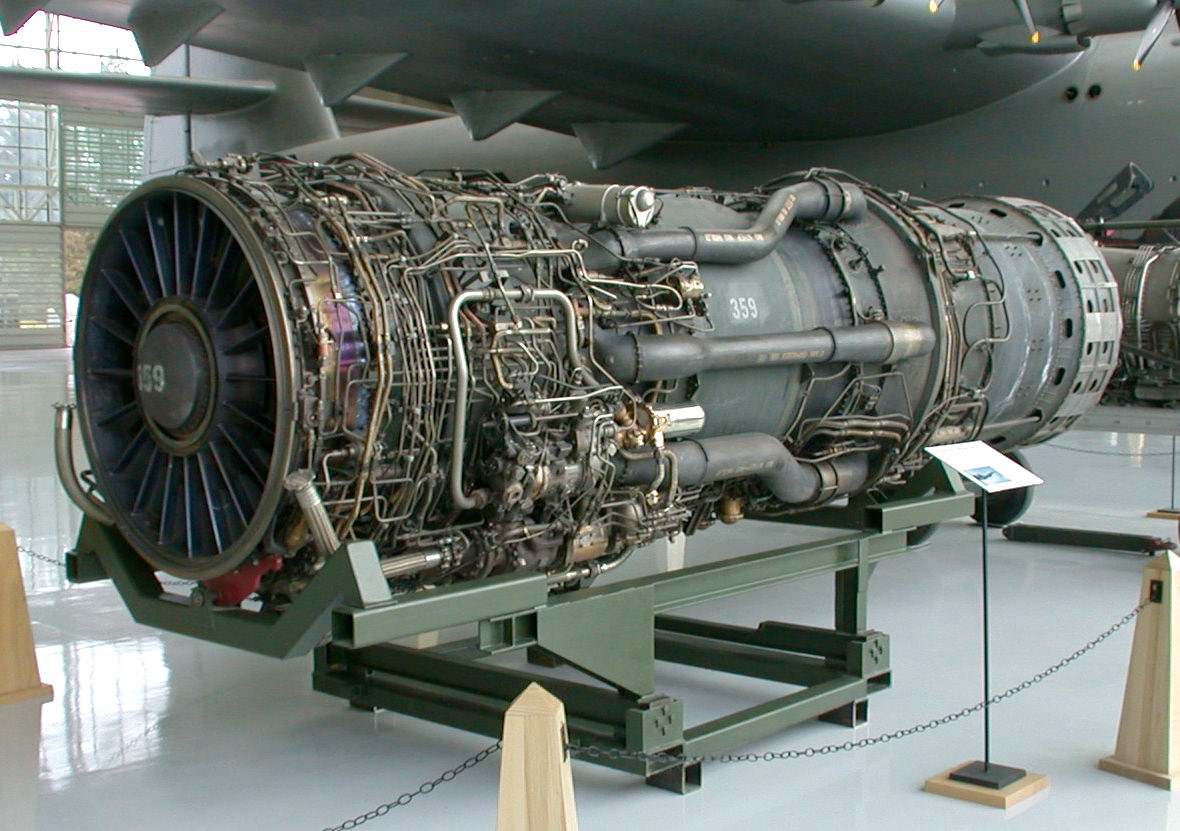
End of World War II--In 1942, Adolf Galland of Germany flew a prototype of one of the worlds first jet engine propelled airplanes. The invention of the jet engine came too late to effect the outcome of the war, but its impact on the future of airplanes was immense.
Computers--As computers enter the scene of flight, more sophisticated airplanes and control towers develop, and commercial and private flying become widespread. Today, airplanes make the world a smaller place, giving us the ability to be on the other side of the world within 24 hours. Isn't it wonderful?
Subscribe to:
Posts (Atom)